Did you know that 4 in 10 American adults have obesity, with the rate reaching 37.0% in 2025 according to Gallup obesity research? One major culprit: portion sizes have ballooned dramatically over the past 30 years.
You want to control your portions for better health, but you don’t have a food scale, or weighing every meal feels overwhelming and impractical for real life. Maybe you’re eating out frequently, meal prepping for the week, or simply don’t want to bring measuring equipment everywhere you go.
This guide will teach you 7 research-backed methods to accurately estimate portion sizes using only your hands, common household items, and visual cues—no scale required. The best part? These techniques work anywhere, from your kitchen to restaurants to holiday parties.
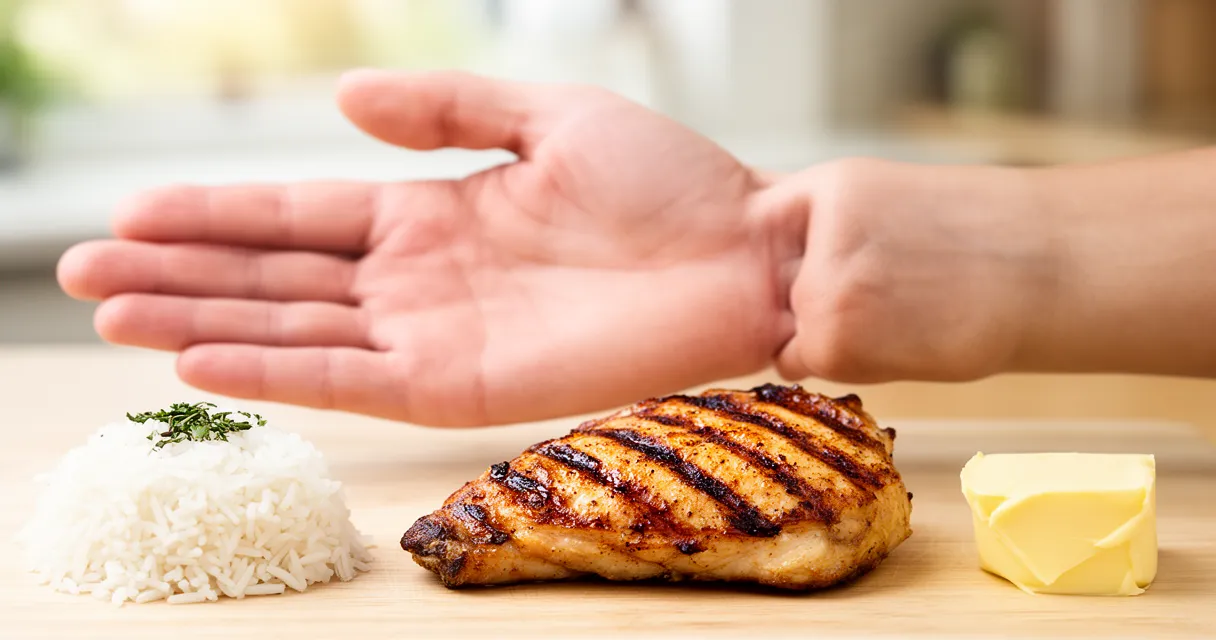
The most reliable method is the hand portion technique: use your palm for protein (3-4 oz), fist for carbs (½-1 cup), cupped hand for vegetables (1 cup cooked), and thumb for fats (1 tablespoon). Research published in the Journal of Nutritional Science shows this method achieves 80% accuracy within ±25% for most foods—sufficient for general health and fitness goals, especially considering food labels themselves have a ±20% margin of error.
Why Portion Control Matters (And Why You Don’t Need a Scale)
Portion sizes have grown significantly over recent decades, contributing directly to the obesity epidemic. What counted as a normal serving in the 1980s would seem laughably small by today’s standards.
The 2025-2030 Dietary Guidelines for Americans (released January 2026) emphasize paying attention to portion sizes, particularly for higher-calorie foods. But here’s the good news: you don’t need expensive equipment or obsessive tracking to benefit from portion awareness.
Visual estimation methods are practical for daily life and eating out—situations where pulling out a food scale would be awkward or impossible. Research shows people underestimate portion sizes by 20-50% without guidance, but with simple hand-based methods, you can achieve reliable accuracy.
The Difference Between Serving Size and Portion Size
Many people confuse these two terms, but understanding the serving size vs portion size distinction is crucial.
Serving size is a standardized amount on nutrition labels, regulated by the FDA for comparison purposes. It’s not a recommendation—just a reference point.
Portion size is the actual amount you choose to eat, which may be larger or smaller than the serving size.
For example, the serving size of pasta is 2 oz dry (about 1 cup cooked), but restaurant portions are often 4-6 oz dry (2-3 cups cooked)—double or triple the reference amount. Understanding this difference helps you make informed decisions about how much food actually goes on your plate.
Method 1: The Hand Portion Method (Most Versatile)
The hand portion method is scientifically validated with 80% accuracy for geometric foods and remains the most versatile approach to measuring portion sizes without a scale.
Your hand naturally scales with your body size, which is actually a feature, not a bug. A 6’2” man with large hands needs more calories than a 5’2” woman with smaller hands, and this method accounts for that proportional relationship automatically.
This technique works for protein, carbs, vegetables, and fats—and it’s completely portable. Your hand is always with you, making it perfect for portion sizes using hands whether you’re at home, work, or traveling.
How to Measure Protein With Your Palm
Your palm (thickness and width, not including fingers) represents 3-4 oz of cooked meat, fish, or poultry.
This works for:
- Chicken breast
- Salmon or other fish fillets
- Ground beef patties
- Pork chops
- Tofu or tempeh
One palm-sized portion provides approximately 20-30 grams of protein, depending on the specific food. For most adults, consuming one palm of protein per meal (3-4 meals daily) meets minimum protein requirements.
How to Measure Carbs With Your Fist
Your closed fist equals approximately ½ to 1 cup of cooked grains, pasta, rice, potatoes, or starchy vegetables.
Use one fist for women and two fists for men as a starting point, then adjust based on your activity level and goals. This portion provides roughly 100-200 calories and 20-40 grams of carbohydrates.
Examples include:
- Brown rice or quinoa
- Whole wheat pasta
- Sweet potatoes or white potatoes
- Oatmeal
- Beans and legumes
How to Measure Vegetables With Cupped Hands
Both hands cupped together represent about 2 cups of raw leafy greens or 1 cup of cooked vegetables.
This is your minimum target per meal. Vegetables are nutrient-dense and low in calories, so you can be generous here. Most nutrition experts recommend at least one serving (two cupped hands) per meal, with no real upper limit.
How to Measure Fats With Your Thumb
Your thumb tip (from the first joint to the tip) equals approximately 1 tablespoon of oils, nut butter, butter, mayo, or salad dressing.
Your entire thumb represents about 1 oz of cheese or nuts (approximately ¼ cup or a small handful).
Fats are calorie-dense (9 calories per gram vs. 4 for protein and carbs), so accurate portion control here makes a big difference. One thumb of fat provides 90-120 calories.
Does the Hand Method Work for Different Body Sizes?
Yes—and the proportional scaling is actually intentional and beneficial.
Larger people with larger hands generally need more calories to maintain their body mass and energy levels. Smaller people with smaller hands need fewer calories. The hand portion method naturally adjusts for this relationship.
That said, if you’re very petite or very tall, you may need to adjust portions slightly based on your specific metabolic needs and goals. The hand method provides an excellent starting point, which you can then fine-tune based on how your body responds over 2-3 weeks.
Method 2: Everyday Object Comparisons
When the hand method doesn’t work well for a particular food (like oddly shaped items), the visual portion control guide using everyday objects provides familiar visual anchors that are easy to remember.
This method is also great for teaching kids portion awareness or explaining portions to others.
Common Object Size Guide
Use these comparisons for quick portion sizes using hands and common items:
- Deck of cards = 3 oz cooked meat or fish
- Tennis ball = ½ cup serving (rice, pasta, ice cream)
- Baseball = 1 cup serving (vegetables, cereal, salad)
- Golf ball = 2 tablespoons (peanut butter, hummus, salad dressing)
- Standard lightbulb = ½ cup serving
- Computer mouse = medium potato or piece of fruit
- Checkbook = 3 oz fish fillet
- Bar of soap = 3 oz serving of meat
These visual cues are particularly helpful when meal prepping or serving food to family members, as they provide concrete reference points everyone can understand.
Method 3: The Plate Method for Balanced Meals
The plate method visualizes portions in relation to plate size and ensures macronutrient balance automatically. It’s endorsed by diabetes educators, registered dietitians, and the American Diabetes Association.
Instead of focusing on individual foods, you think about how they fill your plate—making it incredibly practical for measuring portion sizes without a scale at every meal.
The 9-Inch Plate Rule
Use a standard 9-inch dinner plate and divide it visually:
- ½ plate: Non-starchy vegetables (broccoli, spinach, peppers, cauliflower, salad greens)
- ¼ plate: Lean protein (chicken, fish, tofu, eggs, lean beef)
- ¼ plate: Whole grain carbohydrates (brown rice, quinoa, whole wheat pasta, sweet potato)
Add one thumb of healthy fats (olive oil, avocado, nuts) and you have a nutritionally balanced meal.
Research shows that using smaller plates (9-inch vs. 12-inch) naturally reduces portions by 20-25% without feeling deprived. This simple environmental change leverages the Delboeuf illusion—the same amount of food looks more substantial on a smaller plate, increasing satiety signals.
Method 4: Measuring Cups and Spoons (The Hybrid Approach)
While measuring cups aren’t as portable as your hands, they combine precision with convenience and are perfect for certain situations.
This hybrid approach works exceptionally well for meal prep and batch cooking. Measure your grains, proteins, and other foods once during prep, then you’ll know what proper portions look like in your specific containers.
Use measuring cups to calibrate your visual estimation skills. Measure out one cup of cooked rice into your bowl, then notice what it looks like. Repeat this exercise several times with different foods, and you’ll train your eye to recognize accurate portions instantly.
Within 1-2 weeks of this calibration practice, you’ll be able to eyeball portions with impressive accuracy—no tools required. This is especially valuable for foods you eat regularly, as you’re essentially building a mental database of visual references.
How to Estimate Calories Without Weighing Food
If you’re tracking nutrition for specific goals like weight loss or muscle gain, you can estimate calories without weighing food by combining portion estimation with general calorie knowledge.
The key is using estimation ranges rather than exact numbers. Precision isn’t necessary for most people—consistency and awareness matter more than decimal-point accuracy.
Quick Calorie Estimates by Hand Portions
Use these ranges as guidelines (note the ±20% variance):
- Palm of protein = 120-200 calories (lean proteins lower, fattier cuts higher)
- Fist of carbs = 100-200 calories (depends on density and preparation)
- Thumb of fats = 90-120 calories (very calorie-dense)
- Two hands of vegetables = 25-50 calories (negligible for most non-starchy vegetables)
A balanced meal using the hand method (1 palm protein, 1 fist carbs, 1 thumb fat, 2 hands vegetables) provides approximately 400-500 calories for women and 500-700 calories for men.
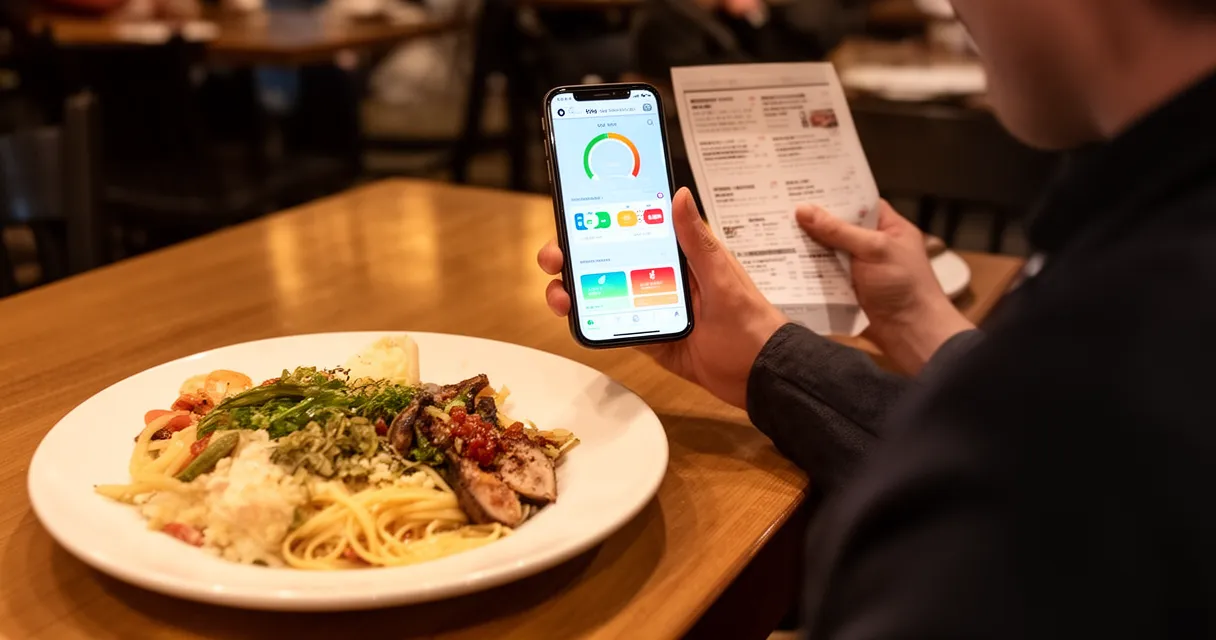
While these visual methods provide solid estimates, modern nutrition tracking apps and AI-powered health tools can help you log hand-portion-based meals quickly without needing to weigh food. Many apps now include hand portion options alongside traditional measurements, making it easier to track your nutrition on-the-go, at restaurants, or when cooking at home.
Some apps even use AI image recognition to analyze photos of your meals and estimate portions automatically. Tools like MyFitnessPal, Lose It!, and others have integrated machine learning models trained on thousands of food images to identify foods and suggest portion sizes based on visual cues in your photos.
For example, you can take a photo of your plate, and AI algorithms will identify the chicken breast, rice, and broccoli, then estimate quantities based on reference objects in the frame (like your hand or standard plate size). While not perfect, this technology is improving rapidly and can achieve 70-85% accuracy for common foods.
This combination of visual estimation skills and digital tracking gives you the best of both worlds—flexibility and accountability. Consider pairing these portion estimation techniques with a nutrition tracking tool to monitor your progress and identify patterns in your eating habits.
How to Control Portions When Eating Out at Restaurants
Restaurant portions are typically 2-4 times larger than standard serving sizes, according to NIH National Heart, Lung, and Blood Institute portion distortion research. A single restaurant entree can easily contain 1,200-2,000 calories—potentially most of your daily needs in one sitting.
But you can enjoy dining out without derailing your nutrition goals by applying these visual portion control guide strategies.
Restaurant Portion Control Strategies
Try these tactics to avoid overeating without seeming difficult or high-maintenance:
- Request lunch portions or half sizes when available (many restaurants offer this)
- Immediately box half your meal before you start eating—out of sight, out of mind
- Share entrees with a dining companion and order an extra side salad each
- Order an appetizer as your main course—often these are appropriately sized
- Use the hand method to visually assess what’s on your plate and decide what to eat vs. save
- Skip the unlimited bread basket or chips—these can add 300-500 calories before your meal arrives
- Ask for dressings and sauces on the side so you control how much you use (aim for 1-2 thumbs)
When your meal arrives, take a moment to mentally divide it using your hand portions. If that salmon fillet is the size of your whole hand (not just palm), it’s probably 6-8 oz instead of 3-4 oz—double the standard portion. Knowing this helps you make informed decisions about how much to eat now versus save for later.
Adjusting Portions for Your Specific Goals
Your portion needs vary significantly based on your goals (weight loss, maintenance, muscle gain), activity level, age, and metabolic rate.
The hand portion method provides an excellent starting point, but you’ll need to adjust based on your specific objectives and how your body responds over time. To gauge that response with numbers instead of guesswork, plug your stats into our body composition calculator every few weeks and watch how your body fat percentage and lean mass shift as you dial in portions.
Portion Sizes for Weight Loss
For weight loss, start with these baseline portions per meal:
Women:
- 1 palm protein
- 1 fist carbs
- 1 thumb fat
- 2 hands vegetables (minimum)
Men:
- 1-2 palms protein
- 1-2 fists carbs
- 1-2 thumbs fat
- 2 hands vegetables (minimum)
Eat 3-4 meals per day with these portions, and you’ll create a modest caloric deficit while maintaining adequate protein and nutrients. Adjust based on results: if you’re losing more than 1-2 lbs per week, slightly increase portions; if you’re not losing after 2-3 weeks, slightly decrease carbs or fats.
AI-powered nutrition coaches and apps can help personalize these recommendations based on your specific metabolism, activity tracking data, and progress photos. Tools like Noom, MacroFactor, and Carbon Diet Coach use machine learning algorithms to analyze your weight trends and automatically adjust portion recommendations for optimal results.
Portion Sizes for Muscle Gain
For muscle gain or athletic performance, increase portions, particularly protein and carbs:
General recommendations:
- 1.5-2 palms protein per meal (especially post-workout)
- 2-3 fists carbs per meal (timing around workouts)
- 1-2 thumbs fat
- 2 hands vegetables (don’t neglect micronutrients)
You’ll need a caloric surplus to build muscle effectively, typically 250-500 calories above maintenance. The extra protein supports muscle protein synthesis, while additional carbs provide energy for intense training and replenish glycogen stores.
Monitor your rate of weight gain—aim for 0.5-1 lb per week for lean muscle gain with minimal fat accumulation. Adjust portions every 2-3 weeks based on your progress.
Frequently Asked Questions
What is the difference between serving size and portion size?
Serving size is a standardized, FDA-regulated amount on nutrition labels used for comparison purposes. Portion size is the actual amount you choose to eat, which may be larger or smaller. For example, the serving size of ice cream is ½ cup, but a typical portion might be 1-2 cups. Serving sizes are reference points, not recommendations.
How accurate is the hand portion method?
Research published in the Journal of Nutritional Science found that 80% of portions estimated with the hand portion method were within ±25% of true weight for structured foods. For general nutrition goals (not competitive athletes), this accuracy is sufficient, especially given that food labels themselves have a ±20% margin of error. The consistency matters more than perfect precision.
How can I estimate calories without weighing my food?
Use hand portions combined with general calorie knowledge: palm of protein = 120-200 calories, fist of carbs = 100-200 calories, thumb of fat = 90-120 calories. Alternatively, use visual portion tracking in nutrition apps that accept hand measurements instead of weights, or leverage AI-powered apps that estimate calories from meal photos.
What everyday objects can I use to measure portion sizes?
Common object comparisons include: deck of cards (3 oz protein), tennis ball (½ cup), baseball (1 cup), golf ball (2 tablespoons), and computer mouse (medium potato or fruit). These are especially helpful for foods that don’t fit the hand method well and provide familiar visual anchors anyone can remember.
Does the hand method work for people of different sizes?
Yes—this is actually an advantage of the method. Larger people with bigger hands typically need more calories, so the method naturally scales with body size. A 6’2” man’s palm provides more protein than a 5’2” woman’s palm, which aligns with their different caloric needs. The proportional relationship is a feature, not a flaw.
How can I control portions when eating out at restaurants?
Request lunch portions or half sizes, immediately box half your meal before eating, share entrees, order an appetizer as your main course, use the hand method to visually assess what’s on your plate, and decline unlimited bread or chips. Remember that restaurant portions are typically 2-4 times larger than standard serving sizes, so planning ahead is crucial.
Check your starting point: Hand portions handle daily meals, but to see whether they’re working, run your numbers through our free body composition calculator for a quick read on BMI, body fat percentage, waist-hip ratio, and lean mass.
Conclusion
You don’t need a food scale to control portions effectively—your hands and simple visual cues provide 80% accuracy, which is more than sufficient for achieving health and fitness goals.
The hand portion method (palm for protein, fist for carbs, thumb for fats, cupped hands for vegetables) combined with the plate method creates balanced meals anywhere, whether you’re at home, dining out, or attending social events. Learning how to measure portion sizes without a scale gives you nutritional freedom and flexibility.
Adjust your portions based on your specific goals: use smaller portions for weight loss, larger portions for muscle gain, and moderate portions for maintenance. The key is consistency and awareness, not obsessive precision.
Practice these methods at home first, using measuring cups occasionally to calibrate your visual estimation skills. After a week of mindful practice, these techniques will become second nature.
Start with one method today—use your hand to measure your next meal’s protein, carbs, and vegetables. Take a mental snapshot of what proper portions look like on your plate. After consistent practice, you’ll develop portion control freedom without the hassle of weighing and measuring everything you eat.
For those interested in tracking their progress, consider exploring our comprehensive nutrition and diet planning guide and learn more about tracking your macronutrients using these visual estimation methods. You can also dive deeper into estimating calories without apps for complete nutritional autonomy.