Try our free Body Composition Calculator — get your BMI, body fat percentage, waist-hip ratio, and lean mass in seconds.
You’ve been working out for weeks, eating clean, and then you step on the scale — and nothing has changed. Sound familiar?
The scale only tells part of the story. When you’re losing fat and gaining muscle simultaneously, your weight can stay flat even as your body completely transforms. That’s exactly why learning how to take body measurements for fitness progress is the smarter move — and the most reliable approach to track fitness progress without a scale.
In this guide, you’ll learn exactly which body parts to measure, how to take each measurement accurately at home, how often to check in, and how to use your data to stay motivated and adjust your plan.
Quick answer: To track fitness progress with body measurements, use a flexible tape measure to record your chest, waist, hips, arms, and thighs. Measure first thing in the morning, once every two to four weeks, and log results consistently to spot meaningful trends over time.
Why Body Measurements Are More Useful Than the Scale for Fitness Progress
The number on the scale fluctuates by 2–5 pounds every single day — and most of it has nothing to do with fat.
Water retention, food weight, hormones, and even how much you slept the night before can all move that number. That’s noise, not signal. Body circumference measurements, on the other hand, capture real changes at specific sites — your waist, hips, arms — even when your total weight stays the same.
Think about it this way: if your waist shrinks two inches but your arms grow one inch, the scale might barely budge. Body measurements reveal that transformation. The scale never could.
Over 58% of U.S. adults now use at least one wearable or health-tracking device, and wearable technology was ranked the #1 fitness trend for 2026 by the American College of Sports Medicine (ACSM). Yet most people still rely on scale weight as their primary feedback tool. Measurements give you the full picture your complete health tracking guide should include.
What You Need to Take Body Measurements at Home
You don’t need expensive equipment. Here’s what to gather before you start:
- A flexible cloth or vinyl tape measure — not a metal ruler or builder’s tape. You need something that wraps around your body.
- A mirror or a helper for hard-to-reach areas like your back or the full circumference of your hips.
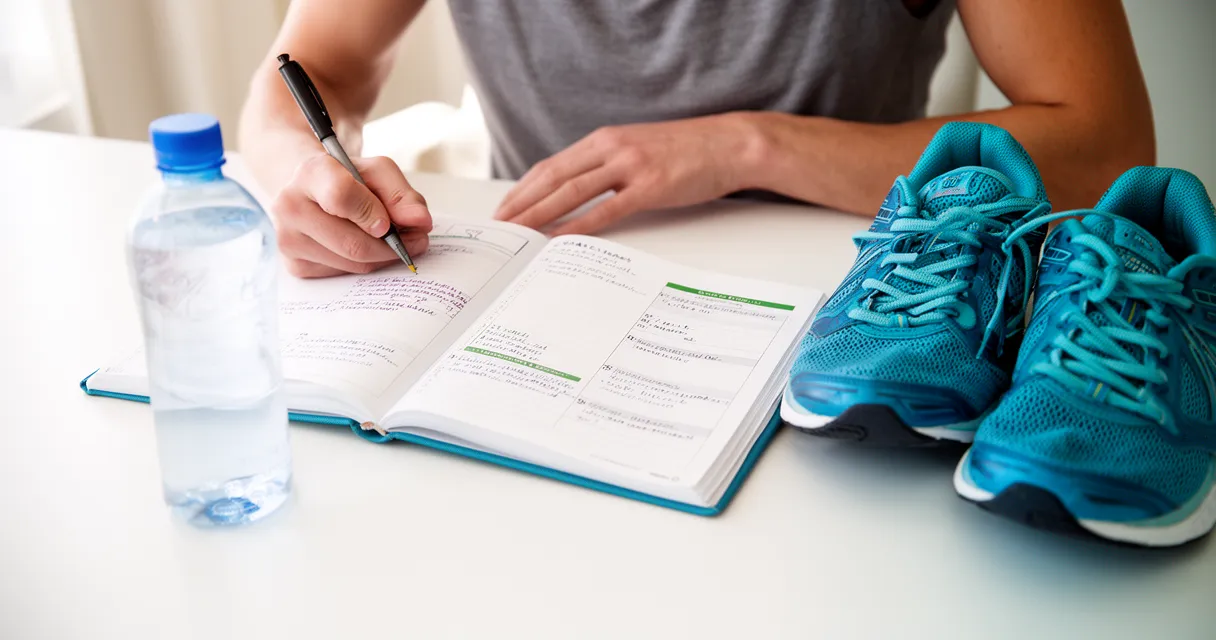
- A consistent recording method — a notebook, a simple spreadsheet, or a health tracker app. (More on apps below.)
- The same outfit (or none) each session — clothing adds inches and introduces inconsistency.
That’s genuinely all you need. Setup takes two minutes, and the data you collect will be more valuable than months of scale-watching.
Which Body Parts to Measure for Fitness Progress
Not all measurement sites are equally useful. What you track should depend on your goal — and knowing what body parts to measure for weight loss vs. muscle gain makes a real difference.
Core Measurement Sites for Most Fitness Goals
These six sites cover the areas most affected by both fat loss and muscle gain:
| Site | Where to Measure | Why It Matters |
|---|---|---|
| Chest | Fullest part of the chest, arms at sides | Tracks upper body fat and muscle changes |
| Natural waist | Narrowest point, ~1 inch above navel | Key indicator of visceral fat reduction |
| Belly (navel level) | At the navel, standing relaxed | Captures abdominal fat independent of waist |
| Hips | Widest part of the buttocks | Tracks lower body fat; used for waist-to-hip ratio |
| Upper arm | Midpoint between shoulder and elbow | Reflects bicep/tricep muscle growth or fat loss |
| Upper thigh | Just below the glute crease | Tracks lower body composition changes |
A bonus health marker worth calculating: your waist-to-hip ratio (waist measurement divided by hip measurement). According to the National Institutes of Health (NIH) clinical guidelines, a waist circumference above 35 inches for women or 40 inches for men is associated with significantly elevated cardiovascular disease risk — so these aren’t just aesthetic measurements.
Optional Sites for More Detailed Tracking
If you’re doing targeted training or want more granular data, add these:
- Calves — useful for runners and cyclists
- Forearms — relevant for grip-strength or climbing-focused training
- Neck — sometimes tracked in bodybuilding to assess overall muscle density
Most people will get everything they need from the core six. Only add optional sites if you have a specific reason.
How to Take Each Body Measurement (Step-by-Step)
Consistency is everything. Small technique variations — where exactly you place the tape, how tightly you pull it — can create fake “progress” or false plateaus. Follow these rules every single time.
Universal technique rules:
- The tape should be snug but not compressing the skin
- Keep the tape parallel to the floor all the way around
- Exhale normally before reading — don’t suck in or puff out
- Take each measurement twice and average them if they differ
Chest: Wrap the tape around the fullest part of your chest, keeping it under your armpits and across your shoulder blades. Arms relaxed at your sides.
Natural waist: Find the narrowest point of your torso — usually about one inch above your navel. Stand relaxed, exhale gently, then read.
Belly: Measure at navel level. This is different from your natural waist and captures abdominal fat more directly. Stand relaxed — do not suck in.
Hips: Stand with feet together. Find the widest point of your buttocks, keep the tape parallel to the floor, and wrap it all the way around.
Upper arm: Find the midpoint between the top of your shoulder and the tip of your elbow. Decide whether you’ll measure flexed or relaxed — then stay consistent with that choice every session.
Upper thigh: Stand with your feet slightly apart. Measure just below the crease where your thigh meets the glute, wrapping the tape around the fullest part.
Common Measurement Mistakes to Avoid
Even experienced trackers make these errors. Check your technique against this list to avoid the common fitness tracking mistakes that skew your data:
- Pulling the tape too tight — this compresses soft tissue and gives artificially small readings
- Measuring at different times of day — morning vs. evening can differ by an inch or more due to food, activity, and fluid shifts
- Measuring after a workout — muscles swell temporarily from increased blood flow, inflating your measurements
- Inconsistent placement — measuring one inch higher or lower than last time produces meaningless comparisons
- Holding your breath — this changes your trunk dimensions; always exhale normally
Take a photo of where you place the tape the first time. That reference image alone will improve your consistency dramatically.
How Often Should You Take Body Measurements for Weight Loss and Muscle Gain
This is one of the most misunderstood parts of body measurement tracking. How often you take body measurements for weight loss or muscle gain should match the pace at which your body actually changes — not how impatient you feel.
Every 2–4 weeks is the standard recommendation. Here’s how to tailor that to your goal:
- Fat loss goal: Every 2 weeks. Fat loss happens relatively quickly and you want frequent enough check-ins to catch plateaus early and adjust calories or training.
- Muscle building goal: Every 3–4 weeks. Muscle gain is slower. Measuring too often just creates anxiety over normal week-to-week fluctuation.
- Maintenance: Monthly check-ins are sufficient to confirm you’re holding steady.
Always measure on the same day of the week, at the same time of day. First thing in the morning, before eating or drinking, is the gold standard — it minimizes bloating, food weight, and post-workout inflammation.
Research published in the Journal of Medical Internet Research (JMIR) found that consistent self-monitoring of health metrics is one of the strongest behavioral predictors of long-term fitness adherence and weight management success. A schedule you stick to beats a perfect schedule you abandon.
How to Record and Use Your Measurements to Drive Results
Taking measurements is only useful if you record and review them. Here’s how to build a body measurement chart for fitness tracking that actually helps you make decisions.
Your tracking template should include:
- Date of measurement
- Each site measurement in inches (or cm)
- Total change since baseline
- Notes (menstrual cycle, illness, travel — anything that might affect results)
Look for trends over 8–12 weeks, not week-to-week changes. A single session’s data tells you almost nothing. A 10-week trendline tells you everything.
Combine your measurements with:
- Progress photos (front, side, back) taken the same day as measurements
- Scale weight to contextualize measurement changes
- Training and nutrition logs so you can connect what you’re doing to the results you’re seeing
Use your baseline measurements to set realistic health goals — for example, “I want my waist measurement down 2 inches over 12 weeks” is far more actionable than “I want to lose weight.”
You can also track your daily health metrics alongside measurements — sleep quality, daily steps, and caloric intake all provide context that makes your measurement data more interpretable.
Using a Health Tracker App and AI Tools to Log Body Measurements
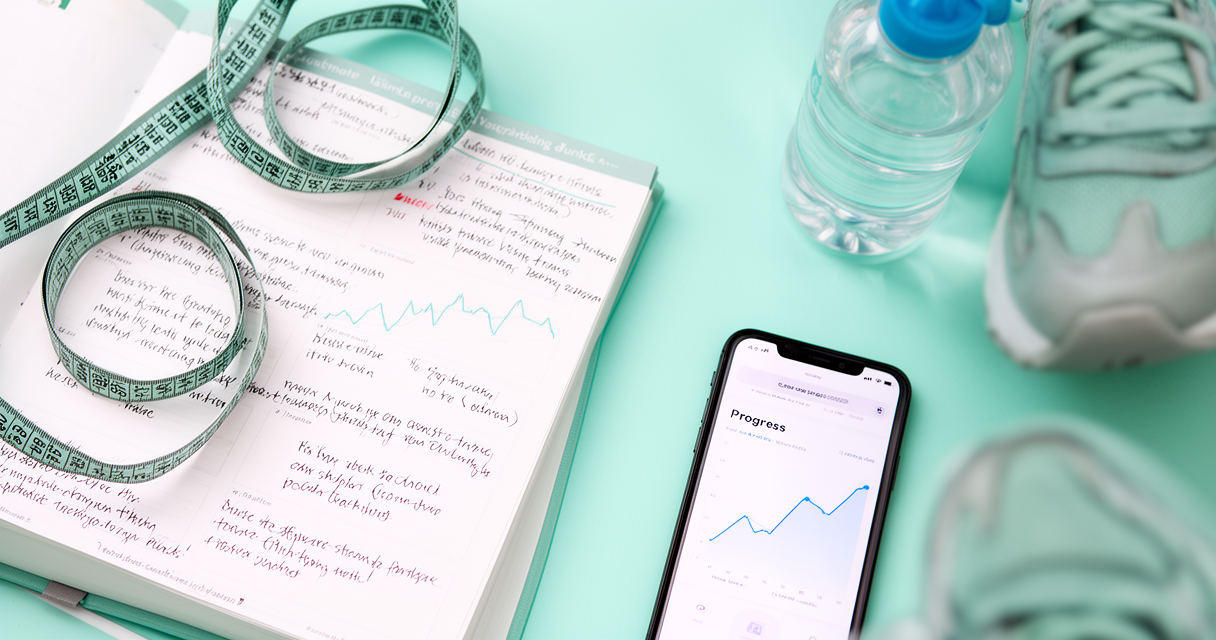
Paper notebooks work, but they make trend visualization nearly impossible. A dedicated health tracker app turns your measurement log into a dynamic dashboard.
A good app lets you:
- Log each measurement site with one tap
- View trend charts for every body part over time
- Combine circumference data with weight, sleep, and activity in one place
- Get notified when progress stalls so you can adjust your approach
AI is making this even more powerful. Apps powered by machine learning can now analyze your measurement trends alongside your nutrition and workout data to identify what’s actually driving your results. Tools like ChatGPT can help you interpret your trend data — for example, you can paste your last 12 weeks of measurements and ask for a progress analysis or help adjusting your fitness plan based on what the numbers show.
Some AI fitness platforms go further, using predictive models to estimate when you’ll reach a goal based on your current rate of change, or flagging measurement patterns that might indicate overtraining or water retention issues. Whether you use a simple logging app or an AI-powered fitness platform, the key is to have your data in one place where you can see it clearly.
Frequently Asked Questions
What body parts should I measure to track fitness progress?
Focus on the six core sites: chest, natural waist, belly at navel, hips, upper arm, and upper thigh. These cover the areas most affected by fat loss and muscle gain. Add calves or forearms only if you’re doing targeted training for those areas.
How often should I take body measurements?
Every 2–4 weeks. For fat loss, measure every 2 weeks. For muscle building, every 3–4 weeks. Always measure on the same day of the week, first thing in the morning before eating or drinking, for the most consistent results.
Is tracking body measurements more accurate than weighing yourself?
Not more accurate per se, but more informative. Scale weight fluctuates daily and can’t distinguish fat from muscle or water weight. Body measurements show actual size changes at specific sites, making them much better at capturing real body composition improvements.
What is the best time of day to take body measurements?
First thing in the morning, before eating, drinking, or exercising. This minimizes variables like bloating, food weight, and post-workout inflammation, giving you the most consistent baseline reading every session.
How do I measure my waist and hips accurately at home?
Waist: Stand relaxed, find the narrowest point (usually 1 inch above the navel), wrap the tape snugly but without compressing skin, exhale normally, then read. Hips: Stand with feet together, find the widest point of the buttocks, keep the tape parallel to the floor all the way around, and read without pulling the tape tight.
Conclusion
Body measurements give you a complete picture of fitness progress that the scale alone simply cannot — especially when you’re losing fat and gaining muscle at the same time.
Here’s what to take away:
- Measure the six core sites (chest, waist, belly, hips, arms, thighs) every 2–4 weeks, always at the same time of day with a flexible tape measure
- Follow consistent technique — snug but not tight, tape parallel to the floor, exhale normally before reading
- Log your results and track trends over 8–12 weeks to see meaningful, motivating progress
- Use AI tools and health tracker apps to visualize your data and make sense of what the numbers are telling you
Now that you know exactly how to take body measurements for fitness progress, the next step is building a consistent tracking habit. Log your first measurements today, set a reminder for your next check-in in two weeks, and use a health tracker app to watch your trend lines move in the right direction.