You’ve had the same headache three times this week — but when your doctor asks how long they’ve been happening, your mind goes blank.
This is one of the most frustrating parts of managing your health. You live with these symptoms every day, yet the moment you sit down in the exam room, the details slip away. Research shows patients accurately recall only 14% of their symptoms when asked about the previous week (SyncSymptom). That leaves doctors making decisions with most of the picture missing.
Knowing how to keep a symptom diary changes that. In this guide, you’ll learn exactly what to record, how often to update it, and how to walk into your next appointment with organized data your doctor can actually act on.
Quick answer: A symptom diary is a daily log where you record your symptoms, their severity, timing, triggers, and relevant lifestyle factors like sleep or diet. It helps you and your doctor spot patterns, speed up diagnosis, and track whether treatments are working. You can maintain it in a notebook, a spreadsheet, or a dedicated symptom tracking app.
What Is a Symptom Diary (and Why It Matters More Than You Think)
A symptom diary is a structured, ongoing record of your physical and mental symptoms — including their context and the lifestyle factors surrounding them. Think of it as your personal health data log, kept over days or weeks so patterns become visible.
Here’s why that matters: a single doctor’s appointment gives your provider a snapshot of one moment. A symptom diary gives them a film reel — a longitudinal view that reveals what a five-minute consultation never can.
The numbers back this up. Patients with documented symptom logs receive accurate diagnoses 2.3 times faster on average than those relying on verbal recall (SyncSymptom). According to the CDC’s Behavioral Risk Factor Surveillance System (2025), 76.4% of US adults — approximately 194 million people — reported having at least one chronic condition in 2023. For anyone in that group, a symptom diary is one of the most effective tools you can bring to a medical appointment.
Who benefits most?
- People managing IBS, migraines, fibromyalgia, or autoimmune disorders
- Anyone experiencing recurring unexplained symptoms
- Patients preparing for a specialist referral
- Anyone whose symptoms vary significantly day to day
What to Record in Your Symptom Diary
Knowing what to write is the biggest barrier for most people. The goal isn’t to journal your entire day — it’s to capture the specific data points that help a clinician identify patterns.
The core six fields to record for every symptom:
- Symptom name and description — Be specific. “Throbbing pain in left temple” beats “headache.”
- Body location — Where exactly do you feel it?
- Onset time — When did it start?
- Duration — How long did it last?
- Severity — Rate it 1–10. This makes trends measurable over time.
- Associated symptoms — Did nausea or fatigue accompany it?
Beyond the core six, also log:
- Triggers: food, stress level, physical activity, weather, menstrual cycle, alcohol
- Medications: name, dose, time taken, and whether it helped or caused side effects
- Lifestyle factors: hours of sleep, sleep quality, hydration, exercise
- Mood and energy level — frequently overlooked but diagnostically important for conditions like fibromyalgia and lupus
Example Symptom Diary Entry
Here’s what to record in a symptom diary — and the difference it makes:
Vague entry:
“Headache today.”
Useful entry:
“Throbbing pain, left temple, 7/10 severity. Onset 2 PM, lasted 4 hours. Preceded by skipping lunch and 5 hours of screen time. Took ibuprofen 400mg at 2:30 PM — partial relief by 4 PM. Slept 5.5 hours the night before. Energy 4/10 all day.”
The second entry includes a potential trigger, a medication response, a sleep data point, and a severity rating. That’s the kind of detail a doctor can use across multiple entries to spot real patterns.
How to Format Your Symptom Diary: Notebook, Spreadsheet, or App
The best format is whichever one you’ll actually use consistently.
Notebook or journal
- Lowest barrier to start
- Works well for analog thinkers
- Harder to spot trends across weeks and difficult to share with providers
Spreadsheet (Google Sheets or Excel)
- Structured and sortable — filter by symptom type or severity
- A basic daily symptom log template might include columns for: Date | Time | Symptom | Location | Severity (1–10) | Duration | Trigger | Medication | Relief | Sleep Hours | Notes
- Free to set up, shareable via link
Symptom tracking app
- Best for consistency: handles reminders, timestamps, and trend graphs automatically
- Many generate exportable PDF summaries ready for doctor visits
- Some use AI-powered pattern detection to flag correlations you might miss
When a Symptom Tracking App Makes Sense
A notebook can’t remind you to log at 3 PM. A spreadsheet can’t send a push notification during a flare-up. A dedicated symptom tracking app fills both gaps.
The best apps go beyond basic logging with features like:
- Automatic timestamps — no need to remember when something started
- Daily reminders — habit-building without willpower
- Pattern alerts — the app flags correlations across entries over time
- Exportable reports — hand your doctor a clean PDF instead of a handwritten notebook
Increasingly, apps layer in AI-powered analysis. Machine learning models trained on symptom data can detect non-obvious correlations — for example, flagging that your fatigue consistently peaks two days after high-stress events, not the same day. That kind of insight is clinically significant and difficult to spot manually.
Tip: When choosing an app, prioritize four features: a customizable severity scale, a trigger field, daily reminders, and an export function. These four cover 90% of what makes a log useful.
How Often Should You Update Your Symptom Diary?
Ideal: log the moment symptoms occur, or within a few hours. Memory degrades quickly — what feels vivid at 2 PM becomes fuzzy by 9 PM.
Practical minimum: once daily before bed. Even a brief entry — “no symptoms today, energy 7/10, slept 7 hours” — is valuable because it establishes your symptom-free baseline.
During flare-ups: log morning, midday, and evening to capture how symptoms shift throughout the day. For conditions like fibromyalgia or inflammatory bowel disease, the timing of peaks matters for treatment decisions.
Practical strategies for staying consistent when learning how to keep a symptom diary:
- Set a daily phone reminder — 9 PM works for most people
- Keep your log visible — nightstand notebook or phone home screen widget
- Pair it with an existing habit — log after brushing your teeth or after dinner
- Don’t skip symptom-free days — a good day is data, not a day off
Consistency beats perfection. A partial week of daily entries outperforms two perfect weeks followed by two weeks of silence. Gaps in data erase patterns.
How to Use Your Symptom Diary at Doctor Appointments
A full log handed to your doctor mid-appointment is hard to use. Prepare a one-page summary before you go — your doctor has limited time, and your job is to make the signal easy to extract.
Focus your summary on:
- The three most significant patterns you’ve noticed — don’t recite the log day by day
- Correlations you’ve spotted — “Symptoms are always worse two days after high-stress events”
- Medication effectiveness — what worked, what didn’t, any documented side effects
- Symptom trajectory — improving, worsening, or staying the same?
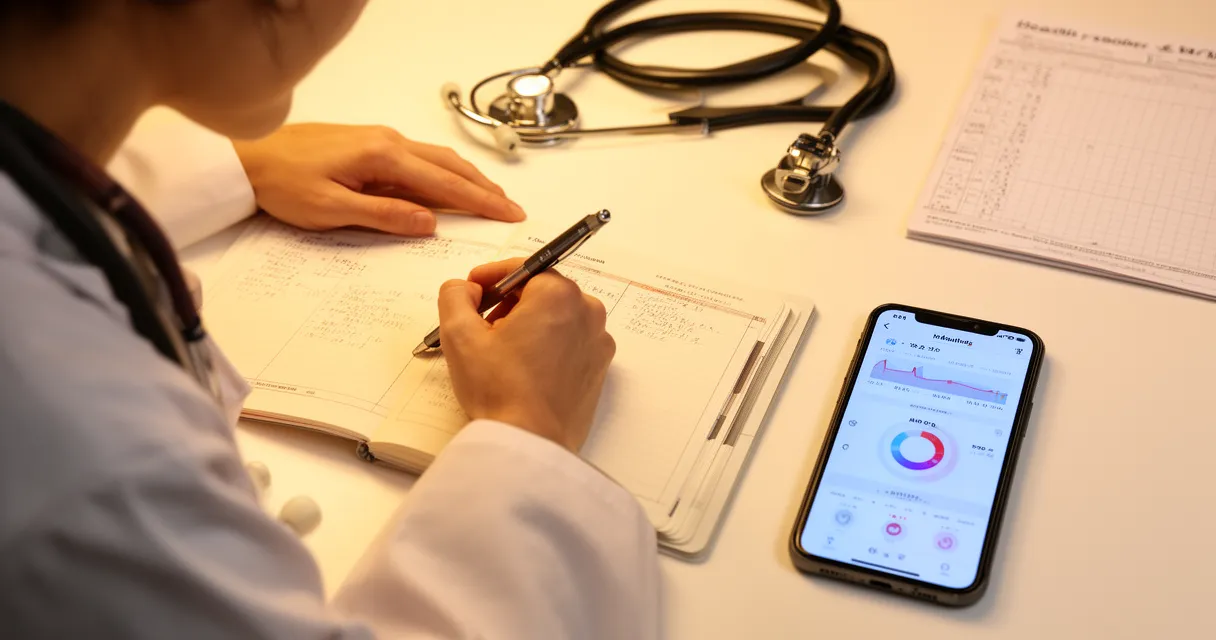
If you’re using a symptom tracking app, export a PDF trend summary before the visit. Visual data communicates patterns faster than verbal description.
After presenting your symptom journal for doctor visits, ask directly: “Does this change anything about my diagnosis or treatment plan?” This prompts engagement with the data rather than a polite acknowledgment.
Common Symptom Diary Mistakes (and How to Avoid Them)
Even a well-intentioned diary falls short if it hits these common pitfalls.
Vague entries — “Felt bad” tells a doctor nothing. Every entry needs at minimum a severity rating, location, and brief description.
Only logging bad days — Symptom-free days matter. If you only log on difficult days, you remove the baseline your doctor needs to gauge improvement.
Forgetting triggers — Food, stress, and sleep data are often the most diagnostically useful information in the diary — and the most commonly skipped.
Stopping after one week — Patterns typically need 2–4 weeks of consistent data to emerge. One week shows daily variation; it rarely reveals reliable correlations.
Not sharing it — The diary only helps if your doctor sees it. Bring it actively. Don’t wait to be asked.
Over-relying on AI tools for diagnosis — Some people use tools like ChatGPT or Claude to analyze their symptom entries and look for patterns. This can help you organize your thoughts and prepare better questions for your doctor — but AI language models aren’t diagnostic tools. Use AI to communicate more clearly, not to replace clinical judgment.
How a Symptom Diary Fits Into Your Broader Health Tracking Routine
A symptom diary is one component of a complete health tracking system. For a broader overview of how to track symptoms for chronic illness alongside other health data, see our complete guide to health tracking and common health tracking mistakes to avoid. If you’re logging food as a potential trigger, our guide to accurately tracking food intake pairs well with the dietary section of your symptom log.
Frequently Asked Questions
What should I include in a symptom diary?
Include the core six fields: symptom name, body location, onset time, duration, severity (1–10), and associated symptoms. Also add triggers (food, stress, activity), medications with dose and effectiveness, sleep quality, and mood or energy level. The goal is enough detail for a doctor to spot patterns across multiple entries.
How often should I update my symptom diary?
Ideally at the moment symptoms occur, or within a few hours. A daily check-in before bed is the practical minimum. During flare-ups, log morning, midday, and evening. Consistency matters more than perfection.
How can a symptom diary help with a diagnosis?
It provides longitudinal data — patterns across days or weeks — that a single appointment cannot capture. Doctors use it to identify triggers, rule out competing conditions, and measure whether a treatment is working. Documented logs lead to diagnoses 2.3 times faster on average.
What is the difference between a symptom diary and a symptom checker app?
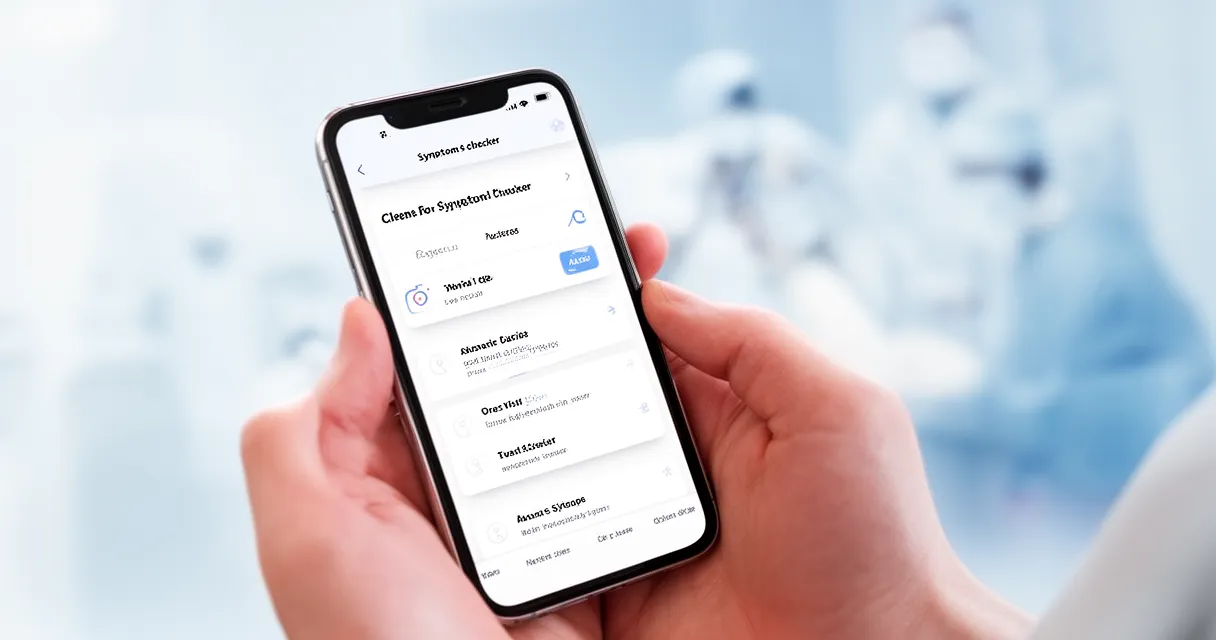
A symptom checker suggests possible conditions based on your current symptoms — useful for triage. A symptom diary or symptom tracking app is an ongoing log over days and weeks, used for pattern recognition and doctor communication. Some modern apps combine both functions.
What are the best apps or tools for keeping a symptom diary?
Prioritize four features: a customizable severity scale, a trigger field, daily reminders, and an exportable report. Apps with AI-powered pattern detection add significant value for people managing complex multi-symptom conditions, flagging correlations across entries that manual review might miss.
Can a symptom diary help reduce unnecessary medical tests?
Yes. Documented data helps doctors narrow the differential diagnosis faster, reducing broad-spectrum testing. A well-kept diary also shows what’s already been tried — which medications, which doses — preventing redundant prescriptions and saving time on referrals.
Conclusion
A symptom diary is one of the most effective tools a patient can bring to a doctor’s appointment — but only if kept consistently and with enough detail to be useful.
Here’s what to take away:
- Record the core six for every symptom: name, location, onset, duration, severity, and associated symptoms — plus triggers, medications, and lifestyle factors
- Log as close to real time as possible, with a daily before-bed check-in as the minimum
- Choose the format you’ll stick to — notebook, spreadsheet, or app — and commit to at least 2–4 weeks before your next appointment
- Prepare a one-page summary for doctor visits and lead with the patterns you’ve noticed
For more on building a complete health monitoring routine, see our guide on tracking your daily health metrics.
Start your symptom diary today — even a simple daily note beats relying on memory. Now that you know how to keep a symptom diary effectively, look for a dedicated symptom tracking app with AI-powered pattern detection and an exportable doctor-ready summary. The sooner you start logging, the sooner the patterns your doctor needs will emerge.